


Top Cameras for Blogging: Great Models for Content Creation
January 3, 2026
Choosing a camera for blogging isn't about dry specs and pretty numbers in tables. It's about convenience, speed, and the feeling that the camera actually helps rather than hinders content creation. When an idea strikes, you need to be able to hit "record" immediately — not dig through menus or fight with autofocus.
Today blogging isn't just photos for Instagram. It's video, live streams, short-form content, shooting while traveling, at home, on the street, and even on the run. The camera needs to handle all of this without extra stress. At the same time, not everyone needs an expensive professional camera — often a compact, well-thought-out model delivers results that are just as good, and sometimes even better.
In this article we've collected cameras that have proven themselves specifically for blogging: with intuitive controls, high-quality image, and reasonable price. No unnecessary hype — only what actually works in everyday shooting.
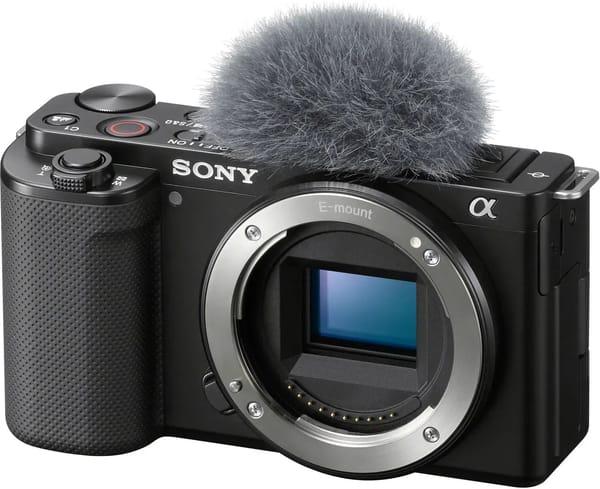
1. Sony ZV-E10
The Sony ZV-E10 is often chosen as a workhorse camera for blogging when you want more flexibility than compact models offer. It uses interchangeable Sony E-mount lenses, so the same camera can work for talking-head videos, street shooting, and still photography. The body is small and lightweight, no viewfinder, with a fully articulated screen — clearly designed for self-shooting and solo work.
The ZV-E10 shoots photos and video without unnecessary complications while still leaving room for manual control. It records 4K video, supports RAW for photos, and works well with external microphones. Electronic stabilization won't replace a gimbal, but it helps with calm handheld shooting. Overall, it's a versatile tool for creators who shoot regularly in different formats.
Key highlights:
Mirrorless camera with interchangeable Sony E lenses
Compact body and fully articulated touchscreen
RAW + JPEG stills
4K video up to 30 fps
Microphone input and HDMI
Best for:
Video bloggers and YouTube creators
People who want to swap lenses depending on the task
Solo content creators
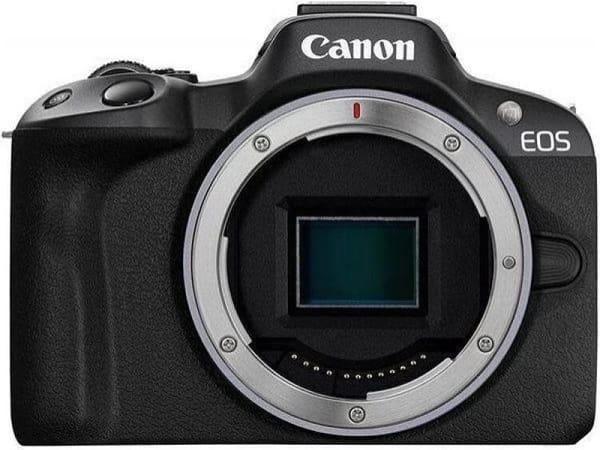
2. Canon EOS R50
The Canon EOS R50 looks like the camera for someone just entering the mirrorless world who doesn't want to be limited to a smartphone. It uses the Canon RF mount while remaining fairly compact. Unlike many vlogging-oriented models, it has an electronic viewfinder — very convenient for photography and shooting outdoors in bright light.
The camera confidently handles everyday tasks: RAW + JPEG photos, 4K video, intuitive menu. It lacks in-body stabilization, so for video most people use a tripod or stabilized lenses. Autofocus is reliable and well-suited for people, talking-head videos, and casual lifestyle content.
Key highlights:
Canon RF mirrorless system
Electronic viewfinder and fully articulated screen
RAW + JPEG stills
4K video up to 30 fps
Microphone input and Wi-Fi
Best for:
Beginner bloggers
People shooting photos and video without complex scenarios
Existing Canon users
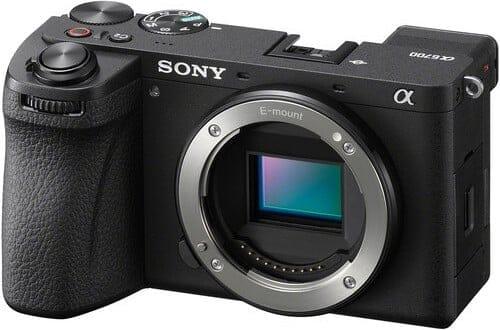
3. Sony Alpha 6700
The Sony Alpha A6700 is usually chosen by people who already know what they want from a camera. It's noticeably larger and more feature-rich than the ZV series and is built for more active shooting. It uses an APS-C sensor, interchangeable Sony E lenses, and offers more physical controls thanks to additional dials.
The A6700 excels at video — especially when stabilization and high frame rates matter. In-body stabilization really helps with handheld shooting, and autofocus reliably tracks subjects. It's frequently used for travel content, dynamic scenes, and long shooting days where reliability and control are important.
Key highlights:
26 MP APS-C sensor
Interchangeable Sony E lenses
In-body image stabilization
High frame-rate 4K video
Electronic viewfinder and fully articulated screen
Best for:
Experienced bloggers and videographers
Creators who shoot a lot of moving video
Users who value manual control
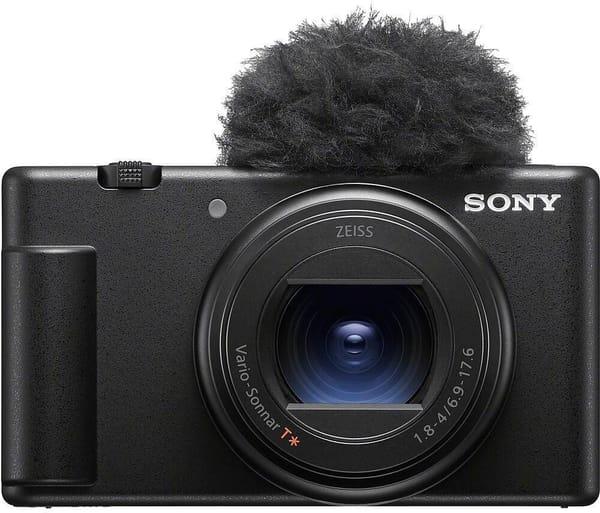
4. Sony ZV-1 II
The Sony ZV-1 II is a compact camera for people who don't want to deal with interchangeable lenses and complex settings. It comes with a built-in lens and is ready to shoot straight out of the box. It's lightweight, fits easily in a backpack or bag, and is great for travel, walks, or home shooting.
The ZV-1 II shoots 4K video and JPEG photos, prioritizing quick results over heavy post-processing. The flip-out screen is perfect for vlogs, and the built-in microphone can be supplemented with an external one if needed. Digital stabilization helps with calm shooting, but for active movement it's better to use support.
Key highlights:
Compact camera with fixed lens
Fully articulated touchscreen
4K video up to 30 fps
Built-in + external microphone support
Lightweight and very easy to use
Best for:
Travel bloggers and vloggers
People who want a compact solution without lens swapping
Creators making content for social media and short formats
Conclusion
There is no single universal camera that suits everyone for blogging right away. Every content format has its own requirements, and every creator has their own workflow. Some people prioritize compactness and minimal settings so they can just turn on the camera and start shooting. Others need more image quality, interchangeable lenses, and finer control over the picture.
The models in this selection cover different scenarios: from lightweight travel cameras and short videos to more serious tools for regular shooting and video work. They all work well for blogging — just in different ways. So when choosing, it makes sense to focus not on spec-sheet numbers, but on how and where the camera will actually be used.
In the end, a good blogging camera is one that doesn't distract you from the process and lets you focus on the idea instead of the gear. When the tool fits your shooting rhythm, content becomes simpler, faster, and more relaxed.